Our employees rewind to the 90s, 2000s, and 2010s and remember the gadgets that defined whole eras.
Before AI could suggest the perfect playlist, auto-correct our typos, or recognize our faces in a crowd, technology demanded patience, ritual, and a bit of luck. We didn’t stream music — we carefully burned it onto CDs. We didn’t have instant answers — we flipped through thick manuals or waited for the modem to connect.
Each beep, click, and whirr was a tiny adventure, a puzzle to be solved. Looking back, these clunky, tactile technologies were the first classrooms for the logic, curiosity, and problem-solving skills that now fuel our AI-driven world. Let’s rewind to the 90s, 2000s, and 2010s and remember the gadgets that defined whole eras.
The 1990s: Dial-Up Dreams and Cartridges
The 90s were noisy, literally. Anyone who is connected to the internet remembers the screech of a dial-up modem tying up the family’s phone line. Computers were big, boxy, and glowing through heavy CRT monitors. We saved files on floppy disks and crossed our fingers that they wouldn’t fail.
At the same time, programming was happening on Windows 95, early Linux distros, and tools like Turbo Pascal or C++. Debugging meant flipping through thick printed manuals, and code often traveled between teammates on disks. It was clumsy, but it felt like magic.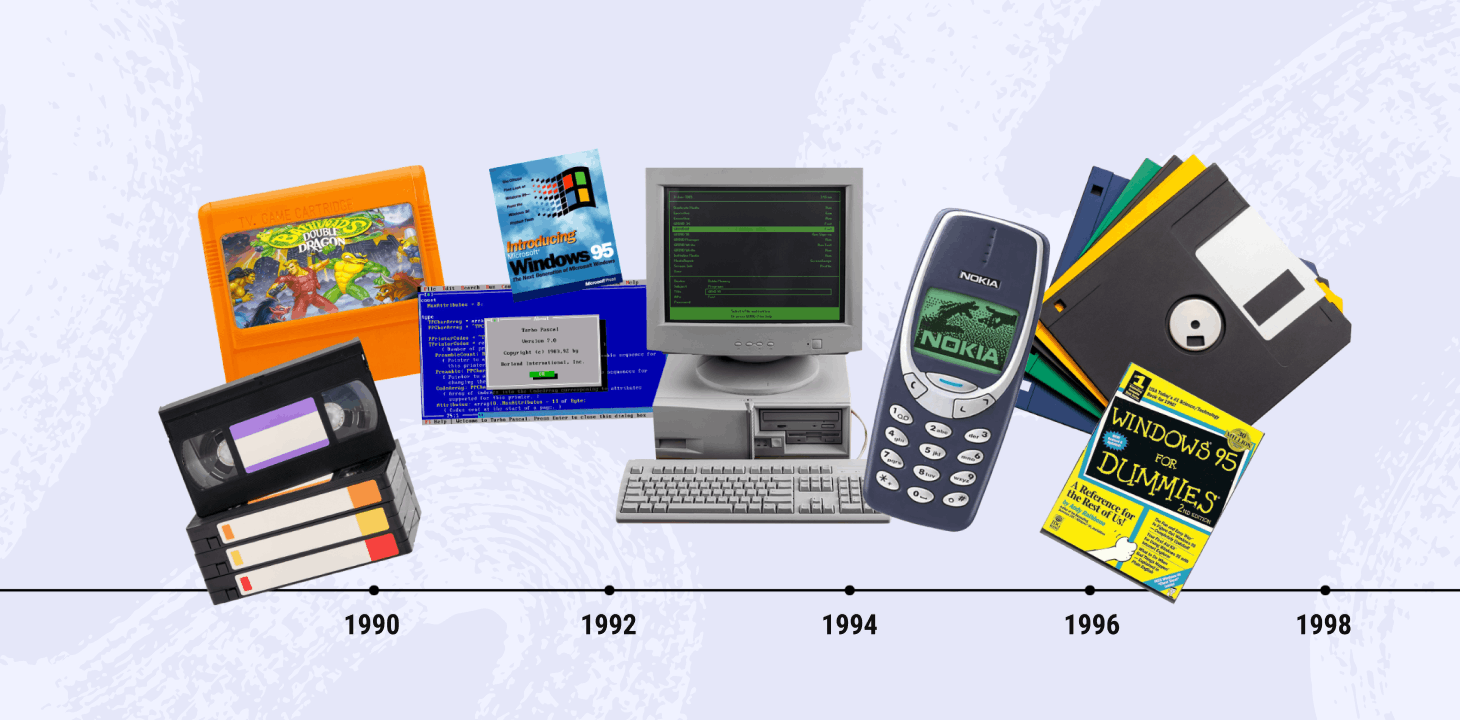
Meanwhile, in our living rooms, VHS tapes and cartridges ruled. Blowing into a Nintendo or Dendy cartridge was a universal ritual. And when the first indestructible Nokias appeared, Snake became the unofficial pastime of an entire generation.
Aliaksandr Zhdanovich, Head of SAP Development Department at LeverX, says:
"I still remember when technology meant effort."
"Photography wasn’t instant — you stood in a darkroom, dipping photo paper into trays of chemicals, waiting for images to appear under red light. The same with music: my father brought home a cassette player in the early 90s, and suddenly our house was filled with DDT songs. I laughed recently when I realized I still listen to them — from tapes to Spotify, some habits stick.
The 90s also meant VHS tapes and clunky consoles. Watching movies at a neighbor’s house on a VCR felt like magic, and our knockoff “Dendy” kept us glued to tank battles for hours. Parents warned us about “burning out the TV tube” on those massive CRTs, and sometimes I had to climb outside with a wrench to twist the antenna just to catch Lithuanian channels. That’s how I first saw Star Wars — though, to be honest, it didn’t impress me much back then.
There were the little rituals too: rewinding tapes with a pencil, patching up chewed-up cassettes, or marveling at classmates’ shiny new CDs that felt futuristic. My first mobile, a Samsung X100, came much later, bought with money from a construction job at university. Before that, our “high tech” was a rotary phone in the hallway.
Looking back, it’s easy to smile at these memories, but I wouldn’t go back. Retrotech today feels fun as nostalgia — and even funny to see it trending again — but for me, the best part is appreciating how far we’ve come.”
The 2000s: Ringtones, Messengers, and the Dawn of Social
The 2000s brought a burst of color and connection. Flip phones snapped shut with satisfying flair, polyphonic ringtones were the ultimate form of self-expression, and MSN Messenger or ICQ kept friendships alive long into the night. Burned CDs were mixtapes of love and friendship, carefully labeled in permanent marker, while DVD players quietly replaced bulky VHS tapes.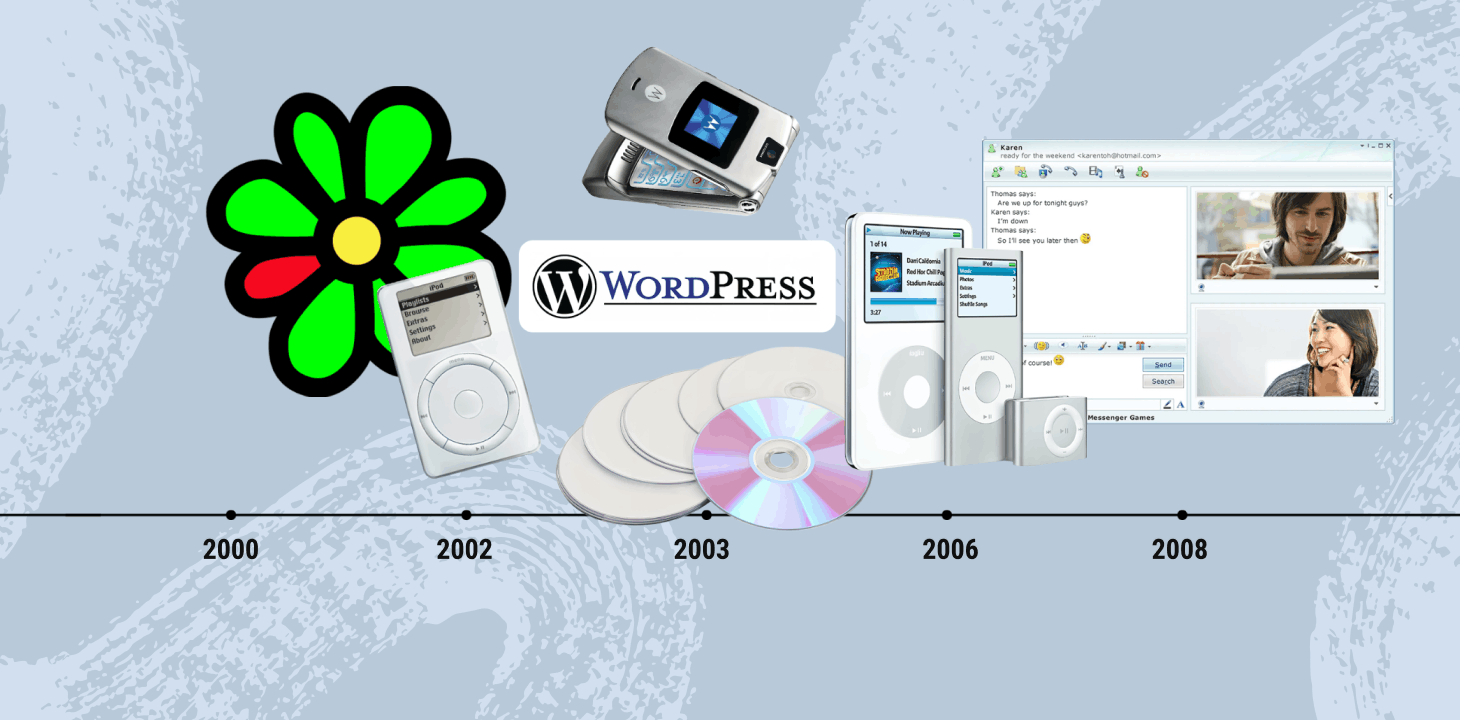
For developers, this was the decade of the dot-com boom, early blogs, and the first wave of open-source tools like Firefox and WordPress. Google was rising to dominance, and version control was shifting toward Git — the quiet beginnings of the workflows we now take for granted.
It was also the decade of the iPod. Suddenly, hundreds of songs lived in your pocket, changing forever how we thought about music.
Aliaksandr Davidziuk, Solution Architect at LeverX, comments:
“For me, the early 2000s will always be about the little things. Walking around with a portable CD player in my pocket (praying it wouldn’t skip on every step 😅), untangling cassette tapes with a pencil, and trading burned DVDs or mp3 disks with friends like they were gold. And of course, Tetris “99-in-1” handhelds and those chunky 8-bit consoles plugged into the TV — tanks, duck hunting, Snake… pure childhood joy.
My first “serious” tech moment came around 2003 when I finally got a PC with a 15-inch LCD monitor — half the price of the whole system, but worth it. Until then, school was full of giant CRT monitors buzzing away.
"Learning to reinstall Windows by myself was a game-changer."
It felt like magic, and honestly, it’s probably the reason I fell deeper into tech and eventually into programming.
And then there were the rituals: cleaning the ball mouse every week, blowing on CDs before putting them in, keeping a whole CD wallet like a treasure chest. Even those laser pointers with weird attachments — skulls, stars, hearts — made you feel futuristic."
The 2010s: Clouds, Selfies, and Streams
By the 2010s, the whole world seemed to fit inside a smartphone. These devices became everything at once — camera, GPS, diary, and jukebox. Social media took over daily life, with Instagram filters like Valencia and Earlybird coloring our memories. Facebook became a global town square, while YouTube turned anyone into a potential star.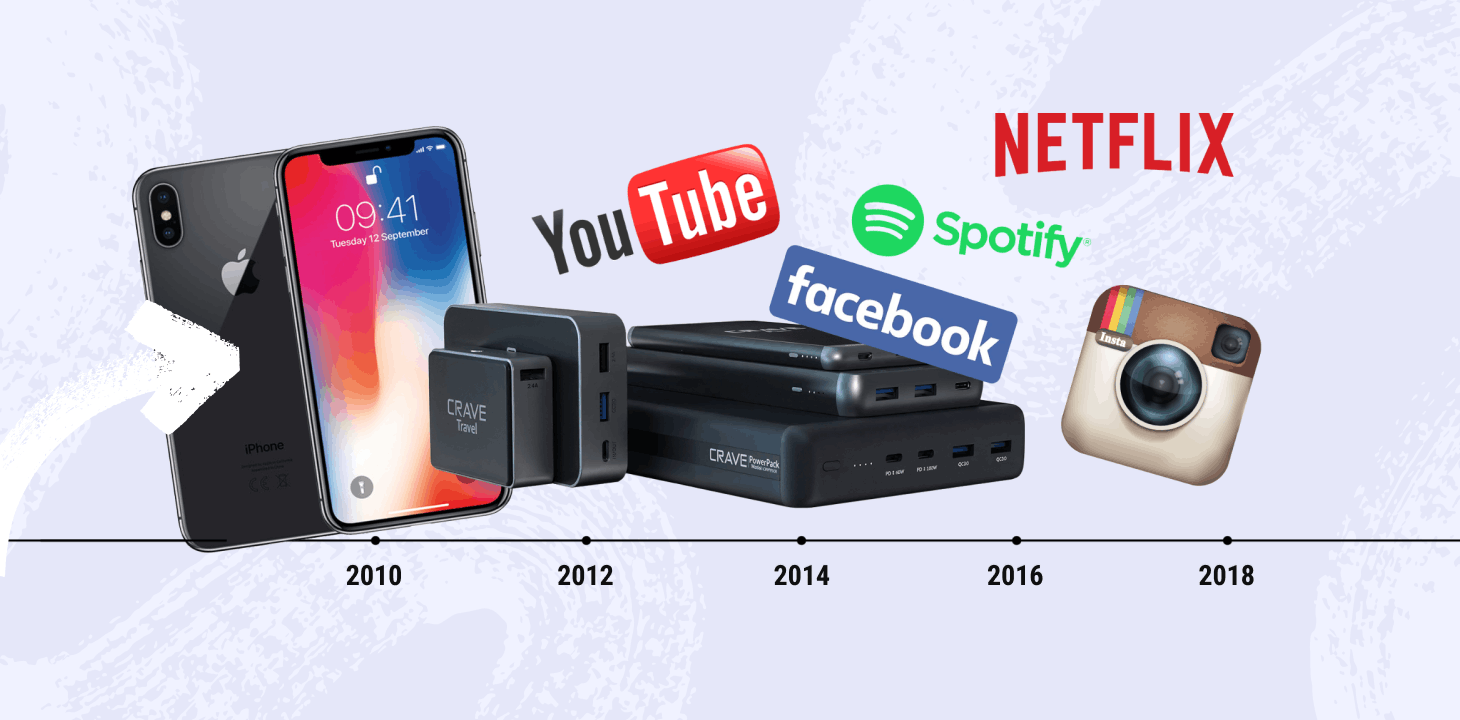
Streaming changed everything again. Netflix binges replaced Friday night DVDs, and Spotify made carrying CDs feel like ancient history. Developers, meanwhile, embraced the “cloud-first” mindset, with Docker, GitHub, and Agile reshaping how people built and shared software.
And because no battery could keep up with this new lifestyle, power banks became just as essential as wallets and keys.
Ruslan Isayeu, SAP Developer at LeverX, comments:
“The 2010s felt like the true tech leap."
"That’s when I finally got fast internet at home — no more waiting ages for a song to download, suddenly I could stream YouTube in FullHD, and it looked like real life. Skype became the way to hang out with friends, and gaming went online for real. Before that, I’d literally call my friends on the landline just to talk about what we found in Oblivion — and the phone bill was insane. :)
I also remember my first “serious” smartphone. Touchscreens finally started to take over, and having the internet in your pocket felt like science fiction. WhatsApp, VK, Instagram — all of it became part of daily life, and suddenly, you didn’t just use tech, you lived in it. Even carrying around an MP3 player started to feel outdated once phones could handle everything.
But what I miss most is the vibe: LAN parties slowly turned into online squads, playlists were shared as links instead of burned CDs, and fiber internet made the world feel smaller. The 2010s might not have had the same clunky charm as the 2000s, but it was the decade where the future really settled into our everyday lives.”
Looking Back, Walking Forward
Looking back, every floppy disk, scratched CD, and pixelated game were small, imperfect steps toward the world we now carry in our pockets — smartphones that translate languages in real time, earphones that summon music or answer questions, VR glasses that transport us across continents, and apps that connect us instantly to anyone, anywhere.
Before AI could help us at every turn, we solved problems on our own and learned through trial and error. Every misloaded disk, tangled cable, and blinking cursor taught us patience, problem-solving, and a little wonder.
Maybe one day we’ll tell our kids about rewinding tapes, blowing on cartridges, or waiting three minutes for a website to load — and they’ll think we’re joking. And honestly, we’ll smile, because those tiny frustrations were part of the magic.
Share this article




.png)
.png)
.png)

.png)